
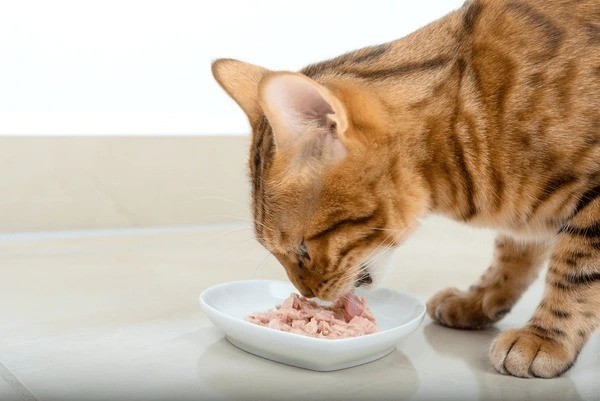
Tuna for cats seems like a perfectly acceptable idea, since cats love fish! So when we open a can of tuna, there's meowing and purring: everything is in order for the cat to get its share. But is it reasonable to give in, or is tuna not recommended for cats?
Tuna for cats
When you open a can of tuna and see your cat running towards you with pleading eyes, you might give in. However, giving your cat canned tuna can have very serious health consequences. Canned tuna contains high levels of mercury, a heavy metal that is highly toxic to cats. If a cat ingests too much mercury, it can have serious repercussions on its nervous system and brain. It can even cause poisoning and lead to death.
Canned tuna contains another toxic substance: bisphenol A (BPA), which can cause cancer. Finally, it's high in fat and sodium, a mineral found in salt. Therefore, it's completely unsuitable for your cat.
Therefore, fresh tuna is preferable. But be careful, raw tuna should be banned from your cat's diet. Raw meat always poses a risk of transmitting internal parasites to your cat, namely intestinal worms.
Therefore, we have prepared for you in the seventh bird a wet tuna food from various brands:
For the cat:
Cheezer wet food for kittens with tuna
Reflex wet food for kittens with tuna and salmon
Jim Cat Shiny Tuna Wet Food for Kittens
For cats:
Sheezer Tuna Wet Food for Adult Cats
Sheezer Wet Cat Food with Tuna in Gravy
Life Cat Wet Food for Cats Tuna with Fruit
Kit Kat Wet Cat Food with Tuna and Chicken
Reflex Wet Cat Food with Tuna and Shrimp
Life Cat Wet Cat Food with Tuna and Shrimp
Jim Cat Shiny Cat Tuna Wet Food in Jelly
Benefits of tuna for cats
1- More protein
A carnivorous cat's diet should consist primarily of animal-based proteins. This is why fish is excellent for cats, as it's a great source of protein. Although packed with protein, natural or canned tuna (unsalted) is lower in taurine than meat.
2- An excellent blend of vitamins, minerals, and fatty acids
Tuna is an oily fish rich in omega-3 fatty acids. These are excellent for overall health, including brain and heart function, and benefit both the body and skin by combating cellular aging. When combined with protein, omega-3s promote growth in cats and provide them with energy thanks to the thiamine and other vitamins they contain, in addition to the fatty acids.
Rich in vitamins B12, C, and B6, as well as potassium and manganese, tuna supports a cat's immune system. It even improves blood circulation thanks to these minerals.
3- Low in calories
Because tuna is considered an “oily” fish, you might think it’s very high in calories. That’s not the case. So-called “fatty” fish isn’t really that (as long as it’s consumed in moderation): its fat content rarely exceeds 15%! In fact, the fatty acids it contains are beneficial and help the body’s metabolism function better.
4- Moisturizing
Cats tend not to drink much, which is why some people, in addition to a bowl of water , choose a mash-based diet. However, giving your cat a little tuna will hydrate them a bit, as tuna is high in water content. Be careful, though; don't replace water exclusively with tuna or mash: danger is guaranteed!
Therefore, we have prepared for you at Al-Ta'ir Al-Sabe' (The Seventh Bird) dry food with tuna from various brands:
Hills Tuna Spayed Cat Dry Food
Purina dry food for adult cats with tuna
Monello dry cat food with salmon, tuna and chicken
Is tuna harmful to cats?
While tuna has multiple benefits for your cat, it also poses a risk if certain precautions are not taken.
Tuna is not a food we can eat regularly, but it's not bad if we eat it intermittently.
Keep in mind that the most common tuna consumed by humans is canned tuna, a processed product that has lost many of its natural nutrients. If we feed cats only tuna, we could suffer from serious vitamin and mineral deficiencies that could negatively impact our health.
1- Toxic elements
To fully benefit from tuna, you should absolutely avoid canned tuna. Your cat will likely be tempted to ask for it as soon as they see you open a can, but for their well-being, don't give in. Canned tuna may contain harmful substances such as arsenic, mercury, organ fragments, or bone fragments. If you notice the following symptoms after your cat has eaten too much tuna, consult an emergency veterinarian:
- Vision disorders
- amnesia
- rash
- Inactivity
- Disorganized movements
In addition, canned tuna contains bisphenol A, a substance suspected of being harmful to the body.
We, the seventh bird, suggest pet.code.clinic to you:
For the best treatment and the best service, you can get a free medical consultation via WhatsApp number 0544789504
2- Too much salt
Another potential problem with canned tuna is its salt content. While a small amount of salt isn't harmful to cats, excessive amounts can cause kidney and urinary tract problems, and can be fatal in cases of salt poisoning.
3- High in fat
Good things shouldn't be abused. While tuna is low in calories and its fat content is beneficial, it should only be offered occasionally, perhaps once a week, to avoid disrupting your feline friend's diet. Tuna doesn't fulfill all of your cat's nutritional needs. This particular cat needs taurine, found in meat; fish shouldn't be the sole component of their diet.
4- Raw tuna should be avoided
Raw tuna should be avoided as it may contain worms. Cooked tuna is preferable.
And you will find at Seventh Bird Cat Treats tuna from various brands: